
News & Commentary

Our Vision to Achieve True Public Safety
For decades, local, state and federal public officials from both political parties and powerful interest groups engineered the system of mass incarceration. They did this in part by constructing a narrative of fear fueled by racism through which they passed laws, spent billions of dollars, and separated millions of families. It was a disaster of epic proportions that unfolded in slow motion and for which we are still paying the price today as a nation.
T
By aclutn

Jan 10, 2020
Clearing the Record: How Eviction Sealing Laws Can Advance Housing Access for Women of Color
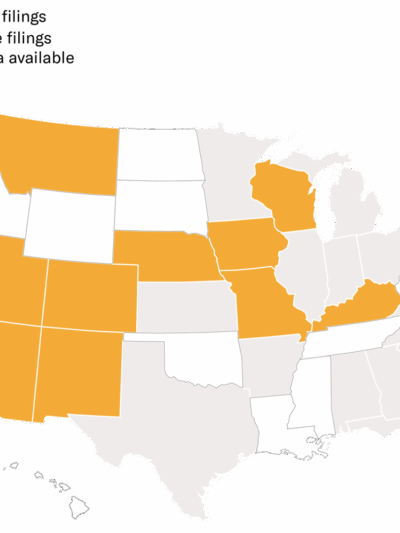
In 2008, Ashley called the police after her ex-partner refused to leave her apartment, threatened her, and threw a rock at her window. The police issued a “trespass notice,” prohibiting Ashley’s abuser from coming back to the home. When Ashley informed her landlord about the incident, the landlord responded by filing an eviction against Ashley and her child. Because evictions based on domestic violence are unlawful, the court threw out Ashley’s eviction. But seven years later, Ashley still struggled to obtain housing because of the prior eviction filing on her record.
By aclutn
Jan 10, 2020
Pregnant Workers Are Still Fighting for the Right to Work
In 2015,
Michelle Durham, an ACLU client, was faced with an impossible choice:
continue working and risk the health of her pregnancy or give up her paycheck.
By aclutn
Jan 09, 2020
“Clemency:” Exposing the Machinery of Death
People on death
row are the direct object of a deeply flawed system of state killing that is infected
by racial and economic disparities and riddled with fatal errors. We currently
know of at least 166
innocent people who were wrongfully condemned to die.
By aclutn
Jan 08, 2020
Iranian Americans Have Rights, Too — No Matter What’s Happening Abroad
Like most Iranian Americans, my family immigrated to the United States in the aftermath of the 1979 revolution in Iran, hoping to find safety and acceptance in a country that prides itself on diversity and freedom of expression. We learned and embraced the principles of the Constitution, including freedom of speech and religion, due process, and equal protection — protections that apply to every person, citizen and non-citizen alike. But what happened at the U.S. border this past weekend was a painful reminder that sometimes, we are still considered outsiders.
By aclutn
Jan 07, 2020
It Is Time for a New Way Forward
In 1996, at the height of the “tough on crime” era, President Bill Clinton signed two laws that dramatically changed the criminal legal system and radically altered the U.S. immigration system. Just as the 1994 crime bill instituted unjust mandatory minimum sentences and ballooned the prison population, the immigration bills of that same era led to similarly disastrous consequences for immigrants — an explosion in the growth of detention and unfairly harsh punishments for immigrants, including mandatory deportations for minor crimes. The Illegal Immigration Reform and Immigrant Responsibility Act of 1996 (IIRIRA) and Antiterrorism and Effective Death Penalty Act of 1996 (AEDPA) resulted in today’s draconian immigration enforcement system. The system only expanded with the increased criminalization of immigrants, who are then funneled into the detention and deportation pipeline — often with little to no due process.
By aclutn
Jan 06, 2020
Tulsa’s Troubling Past is Not Far Removed from Its Present
The Tulsa massacre of 1921 may have become known to many
Americans because of a fictional HBO series, but it actually happened. Is the
probable discovery of heretofore undiscovered mass graves in Tulsa enough to
propel the city to a reckoning —
an unambiguous admission of responsibility for horrific acts and a determined
mind to make right what was wrong? We are about to find out.
By aclutn
Dec 24, 2019
Across the Country Harsh Sentencing Laws are Tearing Apart Families and Communities
During the holiday season, in the picturesque town of Petoskey,
Michigan, Kimiko Uyeda, and her son Marshall celebrate with an annual tradition
of selecting a new ornament to add to
their tree. Year after year, Kimko and Marshall add to their collection
of ornaments as a part of their tradition.
By aclutn
Dec 20, 2019
Four Lawyers. Four Projects. One Non-Stop Year.
It isn’t news that the Trump administration has kept ACLU attorneys working at breakneck speed for the past three years. In 2019 alone, we saw historic moments and victories—from defeating the citizenship question on the 2020 census and bringing the first trans civil rights case to the Supreme Court, to blocking a wave of abortion bans and many of the administration’s attempts to dismantle the asylum system. To name a few.
By aclutn

Dec 20, 2019
A Fair Chance at Opportunity: The U.S. Government Bans the Box
When Rep. Elijah Cummings (D-Md.) reintroduced the Fair Chance Act earlier this year, he
said: “This bill would give individuals who are reentering society from prison
a fair chance at truly achieving the American dream.” The Fair Chance Act would
ban the box that employers use to ask about arrest and conviction history on
job applications. It also requires that federal agencies and contractors
subject a prospective employee to a criminal background check only after a
conditional job offer is made.
By aclutn
Stay Informed
Sign up to be the first to hear about how to take action.
By completing this form, I agree to receive occasional emails per the terms of the ACLU’s privacy statement.
By completing this form, I agree to receive occasional emails per the terms of the ACLU’s privacy statement.