

Election HQ 2026
By completing this form, I agree to receive occasional emails per the terms of the ACLU’s privacy statement.
Last updated on September 04, 2026
Your one stop hub for protecting your voice at the ballot box in Tennessee. Find the latest on our redistricting litigation, a breakdown of how the redistricting process actually works, and candidate information built to help you navigate this election cycle.
This page is funded by the ACLU of Tennessee, a 501(c)(4) organization.
2026 Voter Guide
Our 2026 Voter Guide is a free, nonpartisan resource covering voter registration, key dates, proposed constitutional amendments, your rights as a voter, and more.
With new districts and proposed constitutional amendments, Tennesseans have a lot on the line when they vote this November. The ACLU of Tennessee is working to make sure voters have what they need to stay informed with our 2026 Voter Guide. The free nonpartisan resource covers voter registration, key dates, proposed constitutional amendments, your rights as a voter, and more. Whether you're voting for the first time or the hundredth time, use this guide to make a plan and show up informed.
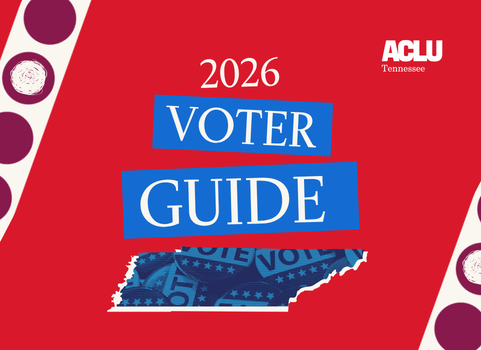
With new districts and proposed constitutional amendments, Tennesseans have a lot on the line when they vote this November. The ACLU of Tennessee is working to make sure voters have what they need to stay informed with our 2026 Voter Guide. The free nonpartisan resource covers voter registration, key dates, proposed constitutional amendments, your rights as a voter, and more. Whether you're voting for the first time or the hundredth time, use this guide to make a plan and show up informed.
Know Before You Go
Everything else you need to vote with confidence, all in one place. Download our key dates graphic, find your district, and learn how to exercise your voting rights, resist voter intimidation, and access disability related accommodations and language assistance at the polls.
- Download and share our key dates graph: Link.
- Visit this interactive database on Stand For Children Tennessee's website to find your district: Link.
- For help on Election Day, call the nonpartisan Election Protection Hotline at 1-866-OUR-VOTE.
- Learn how to exercise your rights, resist voter intimidation, and access disability related accommodations: Link

- Download and share our key dates graph: Link.
- Visit this interactive database on Stand For Children Tennessee's website to find your district: Link.
- For help on Election Day, call the nonpartisan Election Protection Hotline at 1-866-OUR-VOTE.
- Learn how to exercise your rights, resist voter intimidation, and access disability related accommodations: Link
Timeline: The Fight to Protect Fair Representation in District 9
For decades, Tennessee's 9th Congressional District has ensured that Black Memphians have a fair chance to elect candidates of their choice. In the span of a few weeks this spring, the state legislature dismantled that district. Below is our timeline of how we got here, and the legal fight we're waging to reverse it.
April 29, 2026 — U.S. Supreme Court Rules in Louisiana v. Callais In a 6–3 decision that weakens protections against Black vote dilution, the Supreme Court struck down Louisiana’s congressional map as an unconstitutional racial gerrymander, holding that the state’s creation of a second majority-Black district was not required by the Voting Rights Act. Within hours, Tennessee lawmakers point to the ruling as justification to target Memphis's 9th District, a district that has long provided Black voters a fair opportunity to elect their chosen representatives.
May 1, 2026 — Governor Lee Calls a Special Session Under pressure from the Trump Administration, Governor Bill Lee issues a proclamation forcing the General Assembly into a special session to redraw Tennessee's congressional map. The move upends an election cycle already underway, with no input from the voters most affected. ACLU-TN and organizers from across the state immediately understood what was at stake and sprang into action to meet the moment, mobilizing thousands of Tennesseans to call, email, meet with their lawmakers to urge them to vote no on the maps.
May 5–7, 2026 — Legislature Repeals a 50-Year Safeguard and Pushes Through a New Map Over three days, the legislative supermajority repeals a 1972 law that had barred mid-decade redistricting, a guardrail that had been in place for over fifty years. With no support from Black lawmakers, they enact a new map that splits Memphis and Shelby County three ways, stretching each piece deep into white rural counties to dilute Black voting strength.
May 11, 2026 — ACLU Files Federal Lawsuit: Sherman v. Hargett The ACLU and ACLU of Tennessee file suit in federal court on behalf of Black Memphis voters and grassroots organizations. The complaint charges that the new map intentionally discriminates against Black voters and retaliates against them for exercising their political voice, both violations of the U.S. Constitution.
May 13, 2026 — Plaintiffs Move for Emergency Relief Attorneys file for a Temporary Restraining Order (TRO) and preliminary injunction to stop the map from taking effect before candidate filing deadlines. We warn the court that letting the map stand will dilute Black voting power, sow voter confusion, fracture organizing networks built over years, and compromise the integrity of the August primary.
May 26, 2026 — Court Denies the TRO, Schedules Oral Arguments In a narrow procedural ruling, a judge declined to grant immediate relief without addressing the constitutional merits of the challenge, meaning election preparations may continue under the contested map while the full three-judge panel considers whether to issue a preliminary injunction.
June 18, 2026 — Three-Judge Panel Hears Arguments in Nashville A federal three-judge panel convenes to consider whether to block the map ahead of the primary. ACLU attorneys present evidence showing the new district map's boundaries are a direct result of deliberate racial targeting in order to destroy a historically Black district, while Black Memphians fill the courtroom to bear witness and demand their constitutional rights be upheld.
July 23, 2026 — Court Denies Preliminary Injunction The federal court denied our motion for a preliminary injunction in Sherman v. Hargett, sanctioning the decision of the Tennessee General Assembly's all-white supermajority to eradicate a longstanding, naturally occurring, and geographically compact majority-Black district. The plaintiffs will continue litigating the case and pursuing permanent relief.
Where We Stand Now
We may not have won a preliminary injunction, but we aren't giving up. The underlying claims remain pending and our lawsuit continues. We remain committed to this fight for the long haul. Maps drawn to dilute the political power of Black voters have no place in our democracy. We'll keep fighting until fair, constitutional representation is restored for communities across Tennessee.
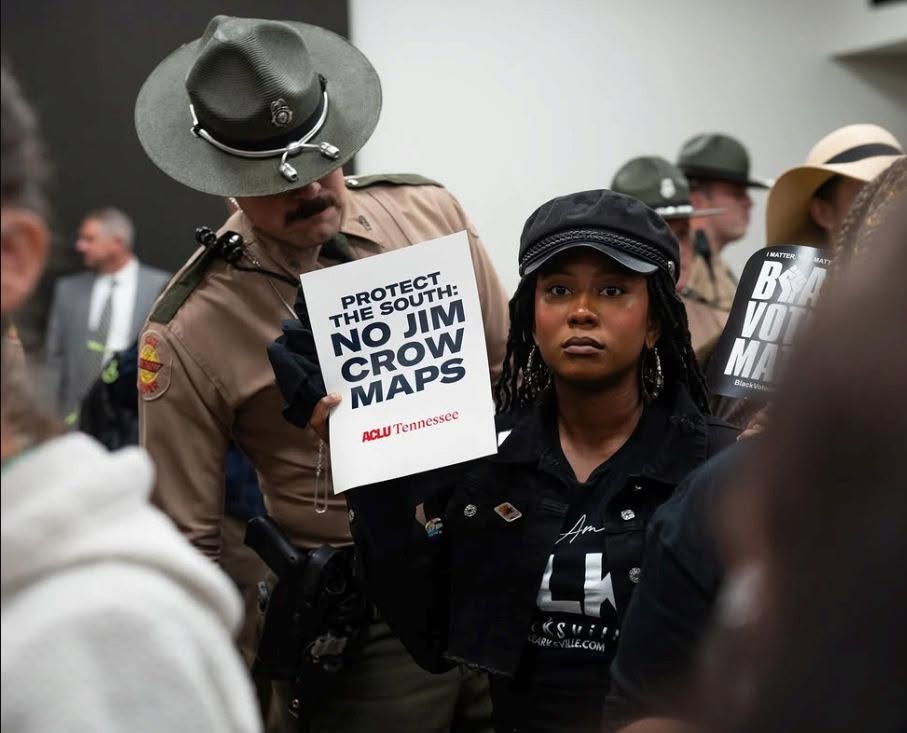
April 29, 2026 — U.S. Supreme Court Rules in Louisiana v. Callais In a 6–3 decision that weakens protections against Black vote dilution, the Supreme Court struck down Louisiana’s congressional map as an unconstitutional racial gerrymander, holding that the state’s creation of a second majority-Black district was not required by the Voting Rights Act. Within hours, Tennessee lawmakers point to the ruling as justification to target Memphis's 9th District, a district that has long provided Black voters a fair opportunity to elect their chosen representatives.
May 1, 2026 — Governor Lee Calls a Special Session Under pressure from the Trump Administration, Governor Bill Lee issues a proclamation forcing the General Assembly into a special session to redraw Tennessee's congressional map. The move upends an election cycle already underway, with no input from the voters most affected. ACLU-TN and organizers from across the state immediately understood what was at stake and sprang into action to meet the moment, mobilizing thousands of Tennesseans to call, email, meet with their lawmakers to urge them to vote no on the maps.
May 5–7, 2026 — Legislature Repeals a 50-Year Safeguard and Pushes Through a New Map Over three days, the legislative supermajority repeals a 1972 law that had barred mid-decade redistricting, a guardrail that had been in place for over fifty years. With no support from Black lawmakers, they enact a new map that splits Memphis and Shelby County three ways, stretching each piece deep into white rural counties to dilute Black voting strength.
May 11, 2026 — ACLU Files Federal Lawsuit: Sherman v. Hargett The ACLU and ACLU of Tennessee file suit in federal court on behalf of Black Memphis voters and grassroots organizations. The complaint charges that the new map intentionally discriminates against Black voters and retaliates against them for exercising their political voice, both violations of the U.S. Constitution.
May 13, 2026 — Plaintiffs Move for Emergency Relief Attorneys file for a Temporary Restraining Order (TRO) and preliminary injunction to stop the map from taking effect before candidate filing deadlines. We warn the court that letting the map stand will dilute Black voting power, sow voter confusion, fracture organizing networks built over years, and compromise the integrity of the August primary.
May 26, 2026 — Court Denies the TRO, Schedules Oral Arguments In a narrow procedural ruling, a judge declined to grant immediate relief without addressing the constitutional merits of the challenge, meaning election preparations may continue under the contested map while the full three-judge panel considers whether to issue a preliminary injunction.
June 18, 2026 — Three-Judge Panel Hears Arguments in Nashville A federal three-judge panel convenes to consider whether to block the map ahead of the primary. ACLU attorneys present evidence showing the new district map's boundaries are a direct result of deliberate racial targeting in order to destroy a historically Black district, while Black Memphians fill the courtroom to bear witness and demand their constitutional rights be upheld.
July 23, 2026 — Court Denies Preliminary Injunction The federal court denied our motion for a preliminary injunction in Sherman v. Hargett, sanctioning the decision of the Tennessee General Assembly's all-white supermajority to eradicate a longstanding, naturally occurring, and geographically compact majority-Black district. The plaintiffs will continue litigating the case and pursuing permanent relief.
Where We Stand Now
We may not have won a preliminary injunction, but we aren't giving up. The underlying claims remain pending and our lawsuit continues. We remain committed to this fight for the long haul. Maps drawn to dilute the political power of Black voters have no place in our democracy. We'll keep fighting until fair, constitutional representation is restored for communities across Tennessee.
Fair Maps, Real Power: Understanding Tennessee's Redistricting Process
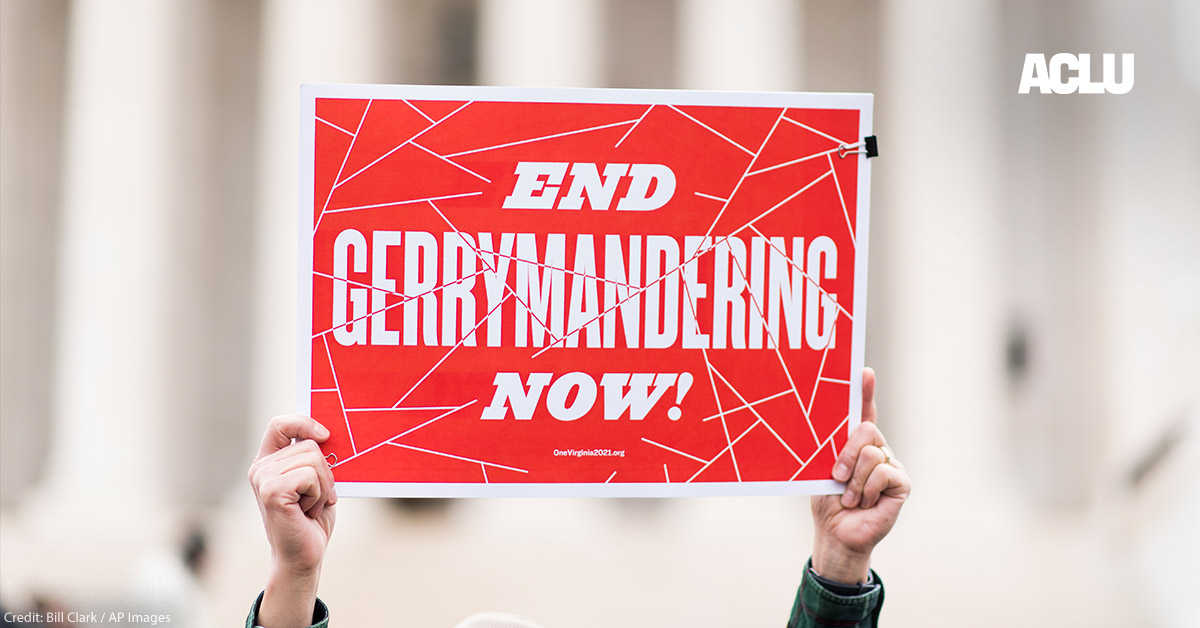
Every ten years, most states redraw the lines that decide who represents us in Congress. Done right, redistricting reflects communities as they actually are. Done wrong, it lets politicians handpick their voters instead of voters choosing their representatives. That is gerrymandering, and Tennessee is living through one of the starkest examples in the country right now.
How Redistricting Works in Tennessee Today
In Tennessee, the state legislature draws the congressional map. There is no independent commission, no citizen review board, and no requirement that lawmakers set politics aside. For decades, one meaningful guardrail existed: districts, once drawn after the census, could not be changed again until the next census. That law was repealed in May 2026, and within days the legislature passed a new congressional map through a special session.
The result split Memphis, home to Tennessee's only majority Black congressional district, across three separate districts, spreading its voters into districts that stretch far into rural, heavily white parts of the state. Multiple federal lawsuits now challenge the map, including litigation brought by the ACLU of Tennessee and its partners.
What Other States Do Differently
Tennessee’s approach is not the only path a state can take. Across the country, a growing number of states have built in safeguards specifically designed to prevent what just happened here. Here is how they compare.
Independent redistricting commissions. Idaho, Michigan, Montana, and Washington rely on independent or bipartisan commissions rather than allowing the legislature alone to draw congressional maps. In those states, an independent commission made up of ordinary citizens, screened for conflicts of interest and balanced across party lines, does the work. Many commission states prohibit current legislators, party officials, lobbyists, or other political insiders from serving.
Multipartisan requirements. Where commissions exist, membership is typically required to represent more than one political party, plus voters unaffiliated with any party. No single party can stack the commission in its own favor.
Bans on mid-decade redistricting. Several states either prohibit or strongly discourage mid-decade congressional redistricting, making new maps outside the normal census cycle uncommon. Tennessee had this protection until May 2026. Once it was removed, the door opened for a mid-cycle map.
Transparency and public input. In states with strong redistricting protections, proposed maps and the data behind them must be published for public review, often with a required comment period before any vote. Tennessee's new map moved from introduction to the governor's desk in a matter of days, with limited opportunity for public review.
Judicial checks. Some states have written rules directly into law that let courts step in quickly if a commission or legislature fails to follow required criteria. This creates a real check, not just a lawsuit filed after the fact.
Tennessee currently has none of these safeguards in place. That is not an accident of history. It is a choice, and it is one that can be changed with people power.
Why This Matters for Tennessee
Tennessee's legislature now has the authority to redraw congressional maps outside the normal census cycle, without an independent commission reviewing or producing those maps, and with minimal public input. That is the landscape we are organizing in. And it is why the ACLU of Tennessee continues to fight in court, in the legislature, and alongside impacted communities for a redistricting process Tennesseans can actually trust.
How Redistricting Works in Tennessee Today
In Tennessee, the state legislature draws the congressional map. There is no independent commission, no citizen review board, and no requirement that lawmakers set politics aside. For decades, one meaningful guardrail existed: districts, once drawn after the census, could not be changed again until the next census. That law was repealed in May 2026, and within days the legislature passed a new congressional map through a special session.
The result split Memphis, home to Tennessee's only majority Black congressional district, across three separate districts, spreading its voters into districts that stretch far into rural, heavily white parts of the state. Multiple federal lawsuits now challenge the map, including litigation brought by the ACLU of Tennessee and its partners.
What Other States Do Differently
Tennessee’s approach is not the only path a state can take. Across the country, a growing number of states have built in safeguards specifically designed to prevent what just happened here. Here is how they compare.
Independent redistricting commissions. Idaho, Michigan, Montana, and Washington rely on independent or bipartisan commissions rather than allowing the legislature alone to draw congressional maps. In those states, an independent commission made up of ordinary citizens, screened for conflicts of interest and balanced across party lines, does the work. Many commission states prohibit current legislators, party officials, lobbyists, or other political insiders from serving.
Multipartisan requirements. Where commissions exist, membership is typically required to represent more than one political party, plus voters unaffiliated with any party. No single party can stack the commission in its own favor.
Bans on mid-decade redistricting. Several states either prohibit or strongly discourage mid-decade congressional redistricting, making new maps outside the normal census cycle uncommon. Tennessee had this protection until May 2026. Once it was removed, the door opened for a mid-cycle map.
Transparency and public input. In states with strong redistricting protections, proposed maps and the data behind them must be published for public review, often with a required comment period before any vote. Tennessee's new map moved from introduction to the governor's desk in a matter of days, with limited opportunity for public review.
Judicial checks. Some states have written rules directly into law that let courts step in quickly if a commission or legislature fails to follow required criteria. This creates a real check, not just a lawsuit filed after the fact.
Tennessee currently has none of these safeguards in place. That is not an accident of history. It is a choice, and it is one that can be changed with people power.
Why This Matters for Tennessee
Tennessee's legislature now has the authority to redraw congressional maps outside the normal census cycle, without an independent commission reviewing or producing those maps, and with minimal public input. That is the landscape we are organizing in. And it is why the ACLU of Tennessee continues to fight in court, in the legislature, and alongside impacted communities for a redistricting process Tennesseans can actually trust.
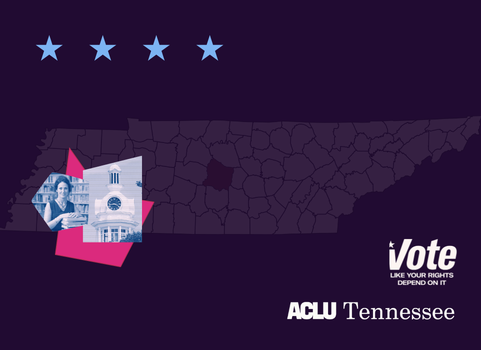
Book Bans Are On The Ballot in Rutherford County
Rutherford County has been in the national spotlight for its ongoing battles over what students and families are allowed to read. Learn more about what candidates for local Rutherford County offices think.
Related Issues
Related Content

- Racial Justice|
- +2 Issues
Tennessee Voters Sue to Block Redrawn Congressional Map that Discriminates Against and Silences Black Memphians

- Democracy & Voting