
Court Cases
All Cases
13 Court Cases
Sep 4, 2026

OUTMemphis v. Skrmetti (formerly OUTMemphis v. Lee)
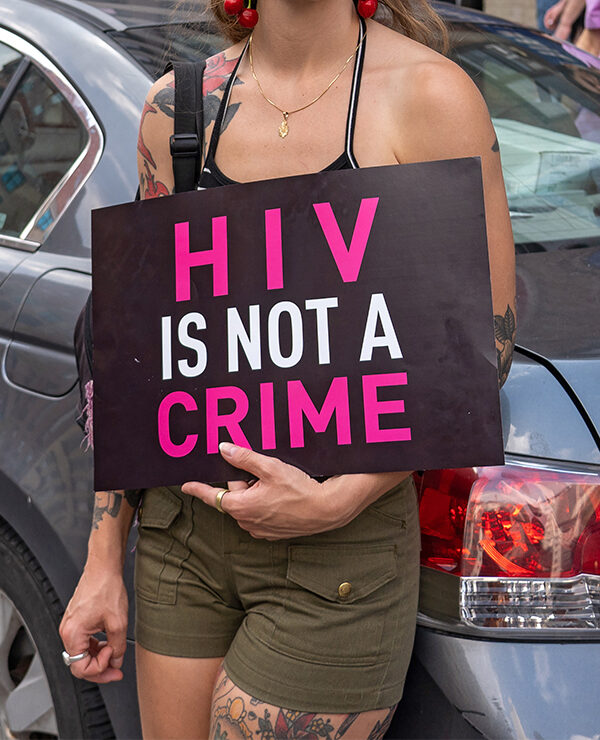
In Tennessee, an individual who is convicted under the generic Prostitution statute – which prohibits engaging in, or offering to engage in, sexual activity for compensation – faces a small fine and minimal jail time. While this is by no means inconsequential, Tennessee has also chosen to criminalize what it calls “Aggravated Prostitution.” Aggravated Prostitution is identical to Prostitution, with one key additional element: knowledge that one is living with HIV. Unlike Prostitution, Aggravated Prostitution is a felony that requires lifetime registration as a “violent sex offender.” The law ignores underlying circumstances; neither consent nor the use of mitigation (such as condoms, ART, or PrEP) are defenses. Indeed, the statute applies even when the alleged sexual activity poses no risk of HIV transmission whatsoever; and the registration requirement is automatic.
People charged with Aggravated Prostitution in Tennessee are most often cisgender and transgender women who engage in sex work to meet basic needs like food, shelter, or other necessities, the vast majority of whom are Black women. Indeed, in 2022, a Black woman in Tennessee was 290 times more likely to be on the sex offender registry for an HIV-related conviction than a white man.
Plaintiff OUTMemphis—a leading service provider of HIV testing, outreach and education in the Midsouth region—has joined four cisgender and transgender women forced to register for life as “sex offenders” due to their Aggravated Prostitution convictions to force Tennessee to abandon its illegal disability discrimination. The ADA is intended to address discrimination against people with disabilities in critical areas like employment and housing. Yet under Tennessee’s HIV laws, people convicted of Aggravated Prostitution are effectively barred from many employment opportunities, housing options, and public spaces as well as family and community life: they are, for example, forbidden from working, living, or even spending short amounts of time within 1,000 feet of a school, playground, park, or other area where children gather. In large cities like Memphis, finding work and housing outside these vast and ever-changing registry “Exclusion Zones” is nearly impossible.
Tennessee, and many other states, passed HIV-criminalization laws in the panicked early days of the AIDS epidemic. Over the last decade, many states have reformed their laws in recognition of the scientific consensus that such measures do not reduce the prevalence of HIV but rather risk doing the opposite: by criminalizing knowledge of one’s HIV status, states like Tennessee disincentivize at-risk individuals from seeking HIV testing and erode the trust in medical professionals that is needed to successfully access treatment and limit transmission. Despite clear evidence that HIV laws, and especially laws requiring sex offender registration, do not work, Tennessee stands alone in the harshness and arbitrariness of its statutory scheme.
Jun 24, 2026

Blount Pride, Inc. v. Desmond
Blount Pride, Inc. (“Blount Pride”) planned a Pride event that would feature drag performances, including a performance by drag queen Flamy Grant. The event was to occur on September 2, 2023 at Maryville College in Maryville, Tennessee. On August, 29, 2023, four days before the event, District Attorney for Tennessee’s Fifth Judicial District, Ryan Desmond, issued a letter to Blount Pride saying that he would enforce the anti-drag law that had been passed in 2022.
In an effort to protect the free speech rights of drag performers, ACLU-TN and attorneys Brice Timmons, Melissa Stewart, Daniel Horwitz, Melissa Dix, and Justin Gilbert filed a complaint and emergency motion for a temporary restraining order on August 30, 2023 on behalf of Blount Pride and Christian artist and drag performer Flamy Grant.
United States District Court Judge Ronnie Greer, in the Eastern District of Tennessee, granted the temporary restraining order and the Pride event proceeded as planned. Defendants then agreed to a preliminary injunction while a previously filed challenge to the anti-drag law, Friends of George’s v. Mulroy, continued on appeal in the Sixth Circuit.


Nov 4, 2021

L.E. v. Lee
Luc Esquivel is a 14-year-old freshman at Farragut High School in Knoxville, TN who has been looking forward to trying out for the boys’ golf team, but his plans were derailed when Gov. Bill Lee signed SB 228 into law. This law banned students from participating in school sports.
Nov 9, 2020

State of Tennessee v. Christopher Bassett, Jr.
Christopher Bassett, Jr. was convicted for the murder in 2015 and in 2020, an amicus brief was filed on his behalf. The state introduced a drill rap music video featuring Bassett and six other men, following in a pattern of treating rap music as inherently incriminating.
Jun 19, 2020
Memphis Center for Reproductive Health v. Slatery
In the summer of 2020, a bill was passed that effectively banned all abortions in Tennessee, causing ACLU-TN to file a lawsuit that would block enforcement of the bill that same day.
Apr 21, 2020
Planned Parenthood of Tennessee and North Mississippi v. Slatery
The Tennessee General Assembly passed a law that would require clinics that provide medication abortions to give their patients false and misleading information about a "reversal" to medication abortions, an unproven claim with no basis in medical research.





Stay Informed
Sign up to be the first to hear about how to take action.
By completing this form, I agree to receive occasional emails per the terms of the ACLU’s privacy statement.
By completing this form, I agree to receive occasional emails per the terms of the ACLU’s privacy statement.